
Last updated: November 2026 · This post contains affiliate links, which may earn me a small commission at no extra cost to you.
Every October it starts the same way in our house. I open the curtains in the morning and the windows are dripping. A few weeks later, there’s a little grey shadow creeping into the corner of the bedroom ceiling, and that musty smell in the wardrobe that no amount of fabric spray can hide.
If that sounds familiar, you’re not alone. Wet winter weather, moisture from everyday activities and cooler rooms can all contribute to condensation.
The good news? A few daily habits and some inexpensive tools can often make a real difference. Here’s a practical place to start.
Why condensation happens
When warm, moist air touches a cold surface — such as a window or an outside wall — water droplets can form. That’s condensation.
Everyday family life adds moisture to the air: breathing, showers, cooking, boiling the kettle and drying clothes indoors. If that moisture cannot escape, it can settle on cold surfaces. Persistent damp conditions encourage mould growth.
The plan is simple:
- Make less moisture.
- Let the moisture out.
- Keep surfaces from getting too cold.
- Remove excess moisture when needed.
1. Know your numbers: get a hygrometer
A small digital hygrometer shows the temperature and relative humidity in a room. It helps you see what happens after a shower, while cooking or when drying washing.
As a practical guide:
- 40–60%: a useful range to aim for.
- Persistently above 60%: look at ventilation and sources of moisture.
- Around 70% or higher: take action to reduce humidity, especially if you also notice wet windows or damp surfaces.
These numbers are a guide rather than a guarantee. Cold corners can still develop condensation even when the reading in the middle of the room looks reasonable.
Try placing a hygrometer in the bedroom and another near your laundry area, away from direct heat or an open window.
➜ Digital hygrometer & thermometer —View on Amazon

2. Wipe the windows every morning
It sounds simple, but removing condensation helps keep window frames and the internal window sill dry.
A microfibre cloth or small squeegee is an inexpensive option. Wring the cloth out in the sink and let it dry somewhere well ventilated.
A window vacuum can make the job quicker, especially if several windows need attention each morning.
Remember to wipe the lower corners and window seals too, where water often collects.
➜ Window vacuum cleaner —View on Amazon
➜ Microfibre cleaning cloths —View on Amazon

3. Ventilate — even when it’s cold
Opening a window in November can feel wrong when you’re trying to keep the house warm. But moisture still needs a way out.
- Open windows wide for a short burst of fresh air, around 5–10 minutes where practical.
- Keep trickle vents open and avoid blocking permanent ventilation.
- Use the extractor fan while cooking and showering.
- Leave the fan running afterwards, following its instructions or using its timer.
- Keep the bathroom door closed during and after a shower while moisture is being extracted.
- Put lids on saucepans to reduce steam.
If your home has a mechanical ventilation system, use and maintain it according to its instructions.
4. Be smart about drying clothes indoors
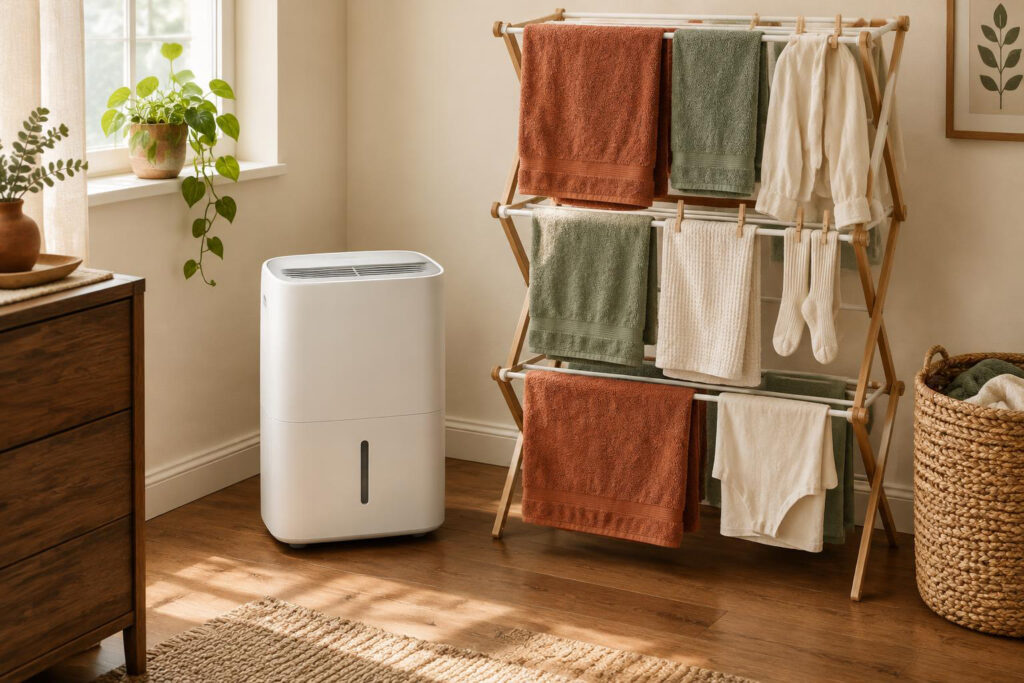
A load of wet washing releases moisture into the air as it dries. Without ventilation or moisture removal, that water can end up on your windows and cold walls.
If you need to dry clothes inside:
- Use one room where you can manage ventilation.
- Keep the door closed to limit moisture spreading.
- Space clothes out so air can circulate.
- Use suitable ventilation or a dehumidifier.
- Avoid draping wet clothes over radiators.
- Use an extra spin cycle if the fabric care instructions allow it.
A heated airer can help clothes dry, but it does not remove the water from your home. Even with a cover, you still need to manage the moisture.
For a fuller comparison of drying methods and running costs, read:
How to Dry Clothes Indoors in Winter: A Complete Guide & Cost Breakdown
➜ Read the indoor drying guide —Read the full article
➜ Neo 3-tier heated clothes airer —View on Amazon
5. Consider a dehumidifier
A dehumidifier removes water from the air and can be useful in rooms that remain humid, particularly when drying washing.
It can help with condensation, but it will not repair a leak or solve a structural damp problem.
Which type?
Compressor dehumidifiers
These generally work more efficiently in warmer rooms. They can be a good option for living areas and indoor laundry spaces.
Desiccant dehumidifiers
These can perform better in cooler conditions and give off more warmth. However, their electricity use may be higher, so compare the specifications of individual models.
What does it cost to run?
For illustration, a dehumidifier drawing 200 watts, with electricity costing 35 cent per kWh, would cost:
0.2 kW × €0.35 = €0.07 per hour
That’s around 7 cent an hour, or 28 cent for four hours at that power draw.
Actual costs depend on the model, room conditions, settings and your electricity tariff. Some machines cycle on and off once they reach the selected humidity.
Useful features to look for include:
- An adjustable humidity target.
- Automatic shut-off when the tank is full.
- Laundry mode.
- A continuous drain option.
- A noise level suitable for the room.
Keep windows closed while the dehumidifier is operating and follow the manufacturer’s guidance on positioning and clearance.
➜ LEENON 25L compressor dehumidifier —View on Amazon
A cheaper option for small enclosed spaces
Moisture absorber tubs can be useful in wardrobes and cupboards. However, they have limited capacity and are not a substitute for ventilation or a dehumidifier in a damp room.
Keep them upright and away from children and pets.
➜ UniBond AERO 360° moisture absorber —View on Amazon
6. Help air circulate around cold surfaces
Condensation often appears in the coldest parts of a room, especially behind furniture or in corners.
- Avoid leaving some rooms much colder than the rest of the house.
- Leave a gap of around 5–10 cm between large furniture and outside walls where possible.
- Don’t pack wardrobes so tightly that air cannot circulate.
- Check behind furniture occasionally for damp patches.
- Keep vents clear.
Thermal curtains can help with comfort, but avoid blocking radiators or ventilation. Check the glass behind closed curtains, as condensation can still collect there.
For more practical ideas, see:
10 Ways to Save Electricity This Winter
➜ 10 Ways to Save Electricity This Winter —Read the guide
➜ Thermal curtains — View on Amazon
➜ Draught excluder —View on Amazon
7. Already have mould? Tackle the cause as well as the patch
Cleaning a visible patch is only part of the job. Unless the source of moisture is addressed, mould may return.
For a small area that is suitable for cleaning yourself:
- Ventilate the room.
- Wear suitable protective gloves and follow the cleaning product’s safety instructions.
- Use a product intended for the affected surface.
- Follow the label for application, contact time and rinsing.
- Dry the surface thoroughly afterwards.
- Avoid brushing or vacuuming dry mould, which can disturb spores.
Never mix bleach with vinegar, ammonia or other cleaning products.
Wash affected washable fabrics according to their care labels. Some porous materials may need replacing rather than surface cleaning.
A mould removal gel may be useful on compatible window seals or bathroom silicone, but check the label first. Deeply stained or damaged silicone may need replacing.
If mould covers a large area, keeps returning, follows a leak or affects someone with asthma or other health concerns, seek professional advice. If you’re renting, report the problem to your landlord in writing.
Anti-mould paint is a finishing step after the underlying moisture problem has been addressed, not a way to cover up active mould.
➜ HG Mould Spray, 500 ml —View on Amazon
➜ Mould remover gel —View on Amazon
➜ Ronseal Anti-Mould Paint —View on Amazon
My quick daily anti-damp checklist
- Wipe condensation from windows and window sills.
- Give rooms a short burst of ventilation where appropriate.
- Put lids on pots and use the kitchen extractor.
- Keep the bathroom door closed while the extractor removes shower moisture.
- Dry washing in a room with suitable ventilation or a dehumidifier.
- Check the hygrometer and look for persistently high readings.
Small, regular habits can help keep windows drier and rooms fresher. If the problem continues despite these changes, investigate the cause rather than simply cleaning the same patch again.
Frequently asked questions
Is condensation on windows normal?
A little condensation can occur on cold mornings, particularly in bedrooms. Regular heavy condensation is a reason to check humidity, ventilation and the temperature of cold surfaces.
Does a dehumidifier make a room colder?
A dehumidifier generally releases some heat into the room while it operates. The amount varies by model and type.
Can mould affect my family’s health?
Damp and mould can affect indoor air quality and aggravate respiratory symptoms, including asthma and allergies. It’s sensible to address persistent damp and mould promptly.
What humidity should my home be?
Around 40–60% relative humidity is a useful general target. Also check for condensation and cold, damp corners, as a single room reading does not tell the whole story.
Can I just paint over mould?
Painting over mould does not address the moisture that allowed it to grow. Deal with the cause, clean or repair the affected surface appropriately, and let it dry before decorating.
Do you have a damp-busting trick that works in your home? Let me know — I’d love to hear it!
— Maja x